 Luxe Themes
Ghost Website Examples: 12 Real Sites on Ghost
Twelve real Ghost websites — 404 Media, Platformer, Tangle, Buffer, Duolingo, Troy Hunt and more — with what each does well and how to build the same on Ghost.
Quick answer: Ghost powers a wide spread of real publications: worker-owned newsrooms (404 Media, Hell Gate, Aftermath), high-profile solo journalists (Casey Newton’s Platformer, David Sirota’s The Lever), paid newsletters (The Browser, Tangle), company blogs (DuckDuckGo, Buffer, Duolingo), and personal sites with very large audiences (Troy Hunt). The common thread is that content is the product, and the owners wanted their own domain, design, and subscriber list.
Twelve Ghost Websites Worth Studying
The list below is limited to sites that verifiably run on Ghost today. Each entry notes what the site is, why Ghost fits it, and one thing you can copy.
Independent Journalism
404 Media
Launched in August 2023 by four former Motherboard journalists, 404 Media is a journalist-owned tech investigations site built on Ghost from day one. Most articles can be read after a free email signup, and paid members get the full archive plus subscriber extras. That “free with an account, paid for the extras” pattern uses Ghost’s built-in tiers and content gating with no plugins.
Copy this: gate on registration, not on payment. Ghost’s members-only visibility gets you the email address; paid tiers convert the readers who stay.
Platformer
Casey Newton moved Platformer, his newsletter about Silicon Valley and tech policy, from Substack to Ghost in January 2024. He kept his paying subscribers, kept his domain, and now pays a flat hosting fee instead of a 10% revenue share. The site is a clean two-tier publication: some issues free for everyone, everything plus the subscriber Discord for paid members.
Copy this: if you already have paying subscribers on Substack, the Substack to Ghost migration carries them across without re-entering card details.
The Lever
David Sirota’s investigative outlet left Substack for Ghost and now runs as a small newsroom with multiple reporters, a podcast, and reader-funded memberships. The homepage reads like a newspaper — a lead story, secondary stories, and topic sections — rather than a chronological feed.
Copy this: if you publish more than one story a day, choose a theme with a multi-column, section-based homepage; a single-column newsletter layout buries your second and third stories.
Hell Gate
Hell Gate is a worker-owned New York City news site that launched in 2022 on Ghost, funded almost entirely by paying members. Its membership page explains what member money pays for, which is a model of how to ask readers for money without an ad-supported fallback.
Copy this: write your membership page like a pitch, not a pricing table. Ghost’s tier descriptions and benefits list render on the sign-up page automatically.
Aftermath
Aftermath is a worker-owned games journalism site founded in 2023 by former Kotaku and Vice writers, funded by memberships and running on Ghost. Several writers share one publication and one set of tiers, with the byline and author pages doing the work of telling readers who wrote what.
Copy this: a small group of writers does not need separate newsletters. One Ghost site, one membership, and per-author pages is a simpler offer for readers and a shared subscriber list for you.
Paid Newsletters and Curated Publications
The Browser
The Browser has recommended five outstanding pieces of writing every day since 2008 and moved onto Ghost to run its paid subscriptions and daily send from one place. The website is essentially the archive of the newsletter — each issue is a post — so members can search years of recommendations.
Copy this: publish every newsletter issue as a post. It gives your archive a URL, indexable text, and a reason for search visitors to subscribe.
Tangle
Isaac Saul’s Tangle is a nonpartisan politics newsletter that moved from Substack to Ghost and runs free and paid tiers from its own domain. The free edition builds the audience; the paid tier funds the newsroom, and both go out from the same Ghost install that publishes the website.
Copy this: make the free edition generous and the paid edition specific — a named recurring issue or feature that only members get — so the upgrade is a concrete thing rather than a vague “support us”.
Company and Product Blogs
DuckDuckGo (Spread Privacy)
DuckDuckGo publishes its Spread Privacy blog on Ghost — product news, privacy research, and explainer posts. It is a good example of a company using Ghost purely for publishing while the product lives elsewhere: no shop, no app, just fast, well-structured articles.
Copy this: if your posts are explainers, use Ghost’s callout, toggle, and header cards to break long pieces into scannable sections; the Ghost editor guide covers each card.
Buffer Resources
Buffer’s Resources blog — its content-marketing hub on social media strategy — runs on Ghost, with a clean editorial design and category-led navigation rather than a reverse-chronological feed.
Copy this: if your blog exists to earn search traffic, organise the homepage around topics (Ghost tags) so evergreen guides stay discoverable long after they slide off the front page.
Duolingo Blog
Duolingo publishes its company blog on Ghost at a blog. subdomain, next to a product site built on something else entirely. Product news, language-learning explainers, and engineering posts share one publication.
Copy this: you do not need to move your whole site to Ghost. A blog. or news. subdomain on Ghost beside your main site is a common setup; the custom domain guide covers the DNS.
Personal Sites and Solo Publishers
Troy Hunt
The creator of Have I Been Pwned writes his security blog on Ghost(Pro) and has done so for years, including through the traffic that comes with breaking a major data breach story. His weekly update posts, sponsor slots, and long-form analysis all live in the standard Ghost editor.
Copy this: you can run sponsorships on Ghost without an ad network — a sponsor block in the post template or a recurring “this week’s sponsor” post is enough.
BirchTree (Matt Birchler)
Matt Birchler’s Apple and productivity blog runs on Ghost with an optional paid membership. It shows what a one-person site looks like when it takes design seriously: custom theme, consistent post images, and a membership offer that is present but never in the way.
Copy this: if you post several times a week, choose a theme with multiple post layouts so link posts, reviews, and essays do not all look identical.
And Ghost Itself
Ghost.org — the marketing site, the blog, and the changelog — is published with Ghost. It is the reference implementation of a marketing site plus publication on one install, and a useful place to see the newest editor cards and membership features in use.
What These Sites Have in Common
Content is the product. None of the twelve sells physical goods or books appointments. Ghost is a publishing system; it wins when publishing is the whole job.
They own the reader relationship. Every one of them collects email addresses on its own domain and, where money changes hands, runs payments through its own Stripe account. Ghost’s 0% platform fee is the reason a publisher like Platformer can grow without a growing bill.
The homepage is designed, not defaulted. The Lever looks like a newspaper, The Browser like an archive, Buffer like a resource library. That variety comes from themes — the CMS underneath is identical.
Search traffic matters. Buffer, Duolingo, and Troy Hunt earn a large share of their readers from Google. Ghost’s clean HTML, automatic sitemaps, and structured data are covered in the Ghost SEO guide.
Dark mode, sign-up forms, and multiple post layouts show up again and again. These are theme features, not Ghost core features, which is why theme choice is the single biggest design decision on the platform.
The Migration Pattern
Several of these publications did not start on Ghost:
- From Substack: Platformer, The Lever, Tangle, and many smaller newsletters, mostly to escape the 10% fee and get their own design.
- From WordPress and Medium: a long tail of blogs citing plugin maintenance, security overhead, or platform paywalls — see the WordPress to Ghost migration.
Ghost’s built-in importers handle WordPress and Substack exports, and members and Stripe subscriptions come across with them.
How to Build a Site Like These on Ghost
- Choose hosting. Ghost(Pro) is the managed option; a VPS or Docker install is cheaper if you are comfortable with a terminal — the self-hosting guide explains what that costs. The Ghost blogging platform overview compares both against WordPress, Medium, and Substack, and the pricing guide has current numbers.
- Turn on memberships and the newsletter. The membership setup guide covers tiers and Stripe; the newsletter guide covers sending and design. Both are built in.
- Pick a theme that matches the pattern you are copying. For a section-based newsroom like The Lever, a newspaper-style theme such as Tribune gives you the multi-column homepage and several post templates. For a writer-led site in the BirchTree mould, a calm, typography-first theme like Senna fits. If you are just starting, the free Ghost themes page and the best Ghost themes roundup will help you compare.
- Publish every newsletter as a post and let the archive earn search traffic, the way The Browser and Tangle do.
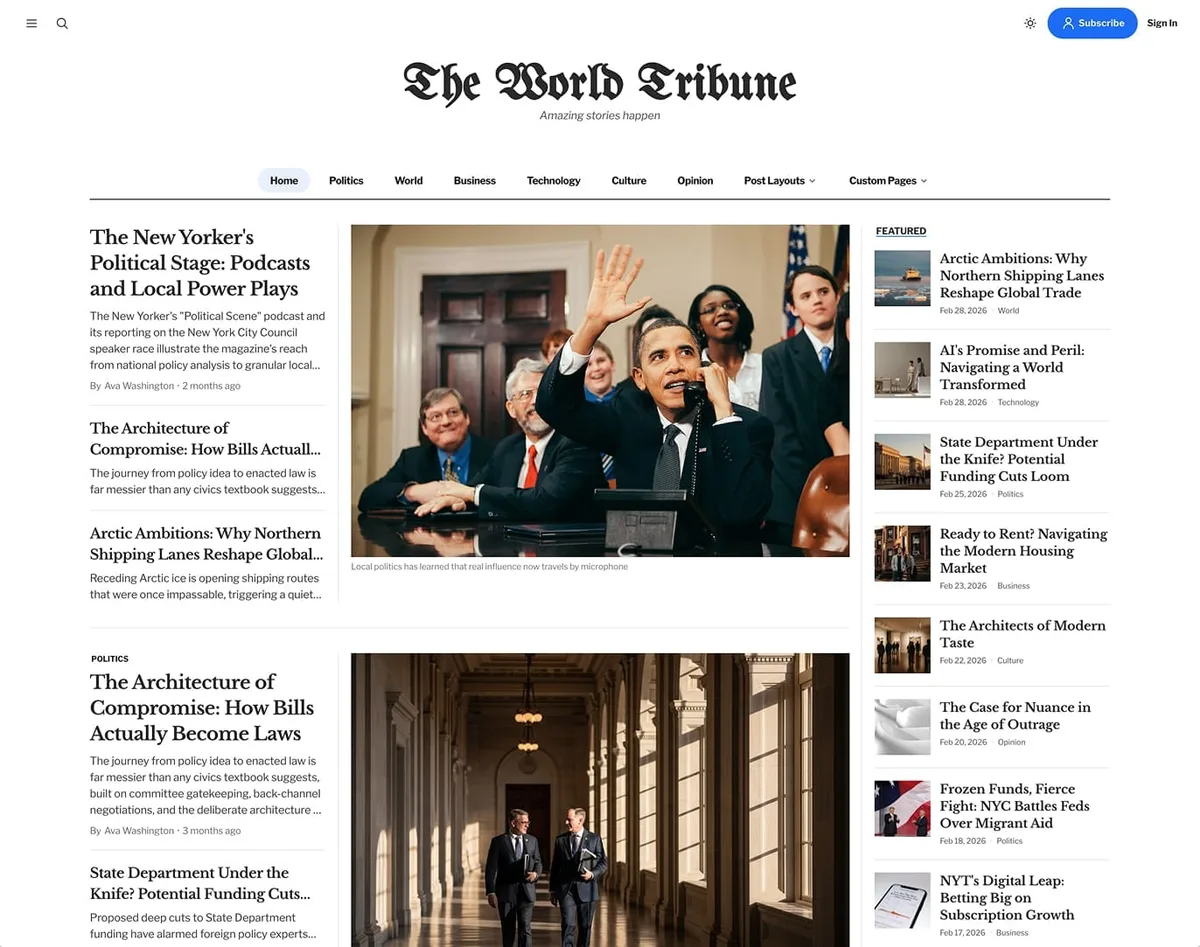
The sites above prove the platform; the theme is what makes yours recognisable. Start with the pattern that matches how often you publish and how you plan to earn, then choose the design that serves it.
Frequently Asked Questions
What well-known websites run on Ghost?
Why do publications move from Substack to Ghost?
Can Ghost handle a high-traffic site?
Do these sites all look the same, like Substack?
Keep reading
Best Ghost Themes 2026: Premium & Free, Compared
The best Ghost themes for 2026, compared by real features and price — top picks for newsletters, magazines, blogs, and memberships, plus when free is enough.
How to Choose a Ghost Blog Theme
Your Ghost theme defines your reader experience. Learn what to look for in layouts, performance, membership support, and design customization.
Ghost Image Sizes: Best Practices
Upload one large original and let Ghost serve the right size automatically. Recommended pixel sizes for every image slot in a Ghost theme, plus format tips.
Free vs Premium Ghost Themes: Worth It?
Is a premium Ghost theme worth $69–$149? What free themes handle fine, what breaks at scale, and exactly what the upgrade buys — compared honestly.
Recommended Themes
These themes excel at the features discussed in this article.







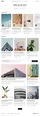
Comparing options? Browse all premium Ghost themes side by side.
Get every theme in one bundle
The complete Luxe Themes bundle — every theme, one purchase.