 Luxe Themes
Best Newsletter Platforms, Compared by Fees
The best newsletter platform depends on one question: who takes a cut of what you earn? Ghost, Substack, beehiiv, Kit, Mailchimp and Buttondown, compared.
Quick answer: The best newsletter platform for monetizing publishers is Ghost — 0% fees, unlimited sends, your own Stripe, and a real website from $18–29/mo. Substack is best for starting from zero (free + discovery, at a 10% cut), beehiiv for growth machinery and ad revenue, Kit for automation-heavy marketing, Buttondown for minimalists, and Mailchimp mainly for e-commerce email. Decide by fee model and by whether you want a website with your newsletter.
Fees re-verified August 2026 — confirm current figures on each platform’s pricing page.
How to Choose
Three questions sort the whole market:
- Do you monetize with paid subscriptions? Then the fee model dominates: 10% of revenue (Substack) versus a flat fee with 0% taken (Ghost, beehiiv, Buttondown) is thousands of dollars a year once you’re earning.
- Do you want a website too? Email-only tools (Kit, Mailchimp, Buttondown) leave your content trapped in inboxes. A publishing platform (Ghost) turns every issue into a permanent, search-indexable page.
- Who owns the audience? Exportable lists and payments in your own Stripe account make platforms replaceable. Platform-held billing and in-app audiences make leaving expensive.
The Comparison
| Platform | Paid-sub fee | Free tier | Website included? | Best for |
|---|---|---|---|---|
| Ghost | 0% | No hosted free tier (open-source self-host) | Yes — full site + SEO | Publishers who monetize |
| Substack | 10% + Stripe | Free, unlimited subscribers | Hosted publication | Starting from zero |
| beehiiv | 0% (paid plans) | Free to 2,500 subs | Hosted publication | Growth + ad revenue |
| Kit (ConvertKit) | n/a (email-only; Commerce 0.6%) | Free to 10,000 subs | No | Automation-heavy creators |
| Mailchimp | n/a (killed subscriptions Feb 2024) | 250 contacts / 500 sends | Landing pages only | E-commerce email |
| Buttondown | 0% (paid add-on $9/mo) | Free to 100 subs | No | Minimalist writers |
Ghost — Best for Publishers Who Monetize
From $15/mo (Starter, annual) or $29/mo (Publisher, adds paid memberships). 0% platform fee, unlimited sends.
Ghost is the only option here that’s a complete publishing platform: write a post, hit publish, and it’s simultaneously a web page on your domain (with sitemaps, schema, and full SEO control) and an email in subscribers’ inboxes. Paid subscriptions run through your own Stripe account with no platform cut; multiple newsletters and segmentation are built in. It’s open-source under MIT, run by a nonprofit.
The trade-offs: no built-in discovery network (growth comes from search and your own channels), and no free hosted tier. Setup details in the Ghost newsletter guide (or, starting from zero, the how to start a newsletter with Ghost walkthrough), and the best Ghost themes for newsletters round-up covers themes built for it.
Choose Ghost if the newsletter is a business — you’ll keep the 10% other platforms take, and your archive compounds into search traffic.
Substack — Best for Starting from Zero
Free with unlimited subscribers; 10% of paid subscriptions + Stripe (~13% of gross).
Nothing gets a newsletter live faster, and the network (recommendations, app, Notes) genuinely finds you readers. The costs come later: the 10% cut scales with your success forever, design control is minimal, and SEO is weak. The break-even versus Ghost arrives at roughly 50–60 paying subscribers — the math is in Ghost vs Substack, and the full field of Substack alternatives is mapped separately.
Choose Substack if you’re validating an idea with no audience. Plan your exit (migrating to Ghost preserves subscribers and billing) before the cut gets expensive.
beehiiv — Best for Growth Mechanics and Ads
Free to 2,500 subscribers; Scale from $43/mo with 0% taken from subscriptions.
Built by the team behind Morning Brew’s growth, beehiiv stacks monetization: paid subscriptions (no cut), a built-in ad network with brand advertisers, and the Boosts marketplace for paid subscriber acquisition. It’s the strongest pure growth toolkit in this list. The trade: proprietary platform, similar-looking publications, limited SEO. Full head-to-heads: Substack vs beehiiv and Ghost vs beehiiv.
Choose beehiiv if you want to grow aggressively and monetize a large free list with ads.
Kit (ConvertKit) — Best for Automation
Free to 10,000 subscribers; Creator from roughly $29–39/mo at 1,000 subs, scaling with list size.
Kit’s visual automation builder, with branching sequences, behavioral tagging and subscriber scoring, is the strongest here. But it’s email-only (no website), pricing climbs steadily with list size, and a September 2025 price hike raised most plans sharply. Comparison: Ghost vs ConvertKit.
Choose Kit if funnels, sequences, and product launches are your business model.
Mailchimp — Best Only for E-commerce Email
Free plan: 250 contacts / 500 sends. Paid plans scale by contact count — including unsubscribed contacts.
Mailchimp remains a capable marketing automation tool for stores, but it’s moved away from creators: the free plan has shrunk, prices rise with contacts, and it shut down paid subscriptions entirely in February 2024. For newsletters specifically, the case for leaving is strong.
Choose Mailchimp if you run an e-commerce store needing behavioral email — not a paid newsletter.
Buttondown — Best for Minimalists
Markdown-first, indie-built; paid subscriptions as a $9/mo add-on with 0% platform fee.
Buttondown is deliberately small: a clean writing-and-sending tool with an API, no feed, no network, no website. Paired costs add up if you need a site too — the math is in Ghost vs Buttondown.
Choose Buttondown if you want the simplest possible tool and already have a website.
Best Free Newsletter Platforms
If “free” is the requirement: Substack (free forever, unlimited, until you monetize), Kit (free to 10,000 — the most generous cap), beehiiv (free to 2,500). Mailchimp’s 250-contact free plan is no longer competitive. Ghost isn’t free as a hosted service, but as open-source software you can self-host it from ~$4/month with full ownership.
The free-tier caveat: free platforms monetize you eventually — via revenue cuts, plan upgrades as your list grows, or both. Pick the free tier whose paid path you’d actually accept.
The Bottom Line
- Newsletter as a business → Ghost (0% fees, own Stripe, website included)
- Just starting, no audience → Substack (free + discovery; revisit at ~50 paid subs)
- Growth-and-ads operator → beehiiv
- Automation-driven creator business → Kit
- Minimalist with an existing site → Buttondown
- E-commerce store → Mailchimp
Whichever you pick: keep the list exportable, keep payments in your own Stripe where possible, and treat the platform as replaceable. The subscriber relationship is the asset — everything else is tooling.
Frequently Asked Questions
What is the best newsletter platform in 2026?
What is the best free newsletter platform?
Which newsletter platform is best for beginners?
Which newsletter platform takes the smallest cut of paid subscriptions?
Do I need a website as well as a newsletter platform?
Keep reading
Kit or Ghost: Email Only, or a Website Too?
Kit is an email tool; Ghost is a publishing platform with email built in. How that difference plays out in automation, SEO, design, paywalls and pricing.
Ghost vs Medium: Full Comparison for Writers
On Ghost you own your email list, set your prices and grow search traffic on your domain. Medium keeps your followers, pays from a pool and holds the rankings.
Ghost vs Substack: Fees, Features & Ownership
Ghost charges 0% revenue share; Substack takes 10% plus Apple in-app fees. Newsletters, design, SEO, pricing, and ownership compared side by side.
Ghost vs beehiiv: How to Actually Choose
Both take 0% of subscriptions, so it hinges on what you keep: Ghost gives ownership, design, and SEO at $29/mo; beehiiv sells growth, ads, and Boosts for $43.
Recommended Themes
Themes with at least one of the features this guide touches: newsletter integration and membership pages.
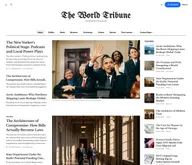
Tribune
Strongest hereTribune is the front page of a newspaper. Lead stories beside the day's picture, a Featured list at the edge, then your sections by topic, each in its own layout, under a masthead that folds away as the reader scrolls. Built for newspapers and multi-author magazines that publish several stories a day, and managed entirely from Ghost admin.

Luno
Strongest hereLuno is a blog that works like an app. A menu that stays open in a fixed sidebar, search a keystroke away, a light and dark switch beside your logo, and a homepage that opens with three featured stories as cover cards. Built for travel, lifestyle and product blogs whose readers expect an interface they already know, and managed entirely from Ghost admin.


Comparing options? Browse all premium Ghost themes side by side.
Get every theme in one bundle
The complete Luxe Themes bundle: every theme, one purchase.