 Luxe Themes
Best Blogging Platforms: An Honest Ranking
Ghost, WordPress, Substack, Medium, Squarespace, Webflow and beehiiv compared as blogging platforms: who owns what, what each costs, and who each one fits.
Quick answer: The best blogging platform for serious writers in 2026 is Ghost — fast, SEO-ready, with newsletters and 0%-fee memberships built in, from $15/mo (or self-hosted from ~$4). WordPress wins when you need a do-everything site, Substack for zero-setup paid newsletters (at a 10% cut), Medium for audience without ownership, Squarespace/Webflow for design-led sites that also blog, and beehiiv for newsletter growth machinery.
Prices verified June 2026 — confirm current figures on each platform’s pricing page.
How We Rank Them
Three things separate blogging platforms once you look past the marketing:
- Ownership. Your domain, your subscriber list, your design, your data — or theirs. Search equity and audience compound on whoever owns the relationship.
- Total cost as you grow. Free tiers and cheap plans hide the real bill: revenue cuts, plugin stacks, or forced upgrades.
- What’s built in. Newsletters, memberships, and SEO either ship in the box or become a second (and third) subscription.
The Comparison
| Platform | Starting cost | Newsletters | Paid memberships | Own domain + SEO control | Best for |
|---|---|---|---|---|---|
| Ghost | $15/mo hosted (annual); self-host ~$4-6/mo | Built in, unlimited sends | Built in, 0% fee | Full | Writers building a publication |
| WordPress | ~$10-15/mo self-hosted | Via plugins/services | Via plugins (e.g. MemberPress) | Full (with plugins) | Do-everything websites |
| Substack | Free; 10% of paid subs | Built in | Built in (10% cut) | Minimal | Zero-setup newsletters |
| Medium | Free | No | Partner Program pool | None | Casual writing, built-in readers |
| Squarespace | ~$16-23/mo | Paid add-on | 5%→0% fee by plan | Good | Design-led sites with a blog |
| Webflow | $18-29/mo | No (third-party) | Paid add-on | Good | Designer-built marketing sites |
| beehiiv | Free to 2,500 subs; $43/mo Scale | Built in | Built in (0% on paid plans) | Limited | Newsletter-first growth |
1. Ghost — Best for Writers Building a Publication
Ghost is the only platform here built specifically for publishing as a business: every post is a fast, SEO-ready page on your domain and an email to your subscribers, paid memberships run through your own Stripe at a 0% platform fee, and the whole thing is open-source (MIT), run by a nonprofit. No plugin stack to maintain, no revenue share, full design control through themes.
What it isn’t: a general-purpose website builder (no e-commerce, no drag-and-drop page design) and there’s no free hosted tier — though self-hosting from ~$4-6/month is a real option. Start with what Ghost can do or the Ghost vs WordPress comparison.
2. WordPress — Best for Do-Everything Websites
WordPress powers 43.4% of the web for a reason: it can become anything — store, forum, portfolio, blog — through its enormous plugin ecosystem. For pure publishing, that flexibility is the tax: a competitive blog stack (hosting, SEO plugin, security, backups, email service) assembles to roughly $1,025/year, versus $348/year for Ghost Publisher with those features built in. Choose WordPress when you need its breadth; choose a publishing platform when you mostly write.
3. Substack — Best Zero-Setup Paid Newsletter
Free until you monetize, payments pre-wired, and a discovery network (recommendations, app, Notes) that genuinely finds readers. The costs arrive with success: 10% of every paid subscription forever (~13% of gross with processing), minimal design and SEO control, and an audience that partly belongs to the network. Break-even versus Ghost lands around 50-60 paying subscribers — the math is in Ghost vs Substack.
4. Medium — Best Borrowed Audience, Least Ownership
Medium gives you a clean editor and ~100M monthly visitors’ worth of potential discovery, free. In exchange you own almost nothing: no custom domain without membership, no SEO control, no exportable follower relationships, and monetization through a shared payout pool you cannot price. Great for testing ideas; see the Medium alternative breakdown before building anything serious there.
5. Squarespace — Best Design-Led Site That Also Blogs
Squarespace is a polished drag-and-drop website builder with blogging attached — right when the site (portfolio, restaurant, services) is the point and the blog is secondary. As a publishing business it gets expensive: newsletters are a paid add-on and membership fees only drop to 0% on the $99/month Advanced plan. Details in Ghost vs Squarespace.
6. Webflow — Best for Designer-Built Marketing Sites
Webflow offers pixel-level visual control no template platform matches — agencies and product sites love it. For blogging specifically: the CMS editor is database-like rather than writer-friendly, there’s no native newsletter, and memberships are a paid add-on, so a content business ends up stitching tools together (full comparison). Pick it when design is the deliverable.
7. beehiiv — Best Newsletter-First Growth Machine
beehiiv is a newsletter platform with a blog-shaped website attached: free to 2,500 subscribers, 0% of paid subscriptions on paid plans ($43/month Scale), plus an ad network and the Boosts subscriber marketplace. It’s growth tooling first, publishing depth second — limited design and SEO control versus a real site. See Substack vs beehiiv and Ghost vs beehiiv.
Best Free Blogging Platforms
If $0 is the constraint: Medium (free, borrowed audience), Substack (free until you charge readers), beehiiv Launch (free to 2,500 subscribers), and WordPress software (free, but hosting isn’t — ~$10-15/month). Ghost has no free hosted plan, but as open-source you can self-host it from ~$4-6/month — less than most “free” platforms end up costing once you monetize.
The free-platform rule: you pay later, in fees or in ownership. Choose the free option whose upgrade path you’d actually accept.
The Bottom Line
- Writing as a business (audience + revenue + brand) → Ghost
- A website that does everything, blog included → WordPress
- Paid newsletter, starting today, zero setup → Substack (revisit at ~50 paid subs)
- Just want to write, no site to run → Medium
- Design-first site with occasional posts → Squarespace or Webflow
- Newsletter growth machine → beehiiv
Whichever you choose: get your own domain, keep your list exportable, and prefer platforms that take 0% of your revenue. Blogs compound for years — make sure they compound for you.
Frequently Asked Questions
What is the best blogging platform in 2026?
What is the best free blogging platform?
Which blogging platform is best for SEO?
Should I start a blog on my own domain or on a platform like Medium?
Keep reading
Ghost vs MemberPress for Membership Sites
Ghost is a membership platform; MemberPress is a WordPress plugin. Both take 0% of revenue. Compare setup, real costs, email and maintenance to choose.
Ghost vs WordPress: Which Is Better for Publishing?
WordPress needs 10 plugins to match what Ghost includes. Compare newsletters, memberships, SEO, security, and the true cost of each for bloggers.
Kit or Ghost: Email Only, or a Website Too?
Kit is an email tool; Ghost is a publishing platform with email built in. How that difference plays out in automation, SEO, design, paywalls and pricing.
Ghost vs Medium: Full Comparison for Writers
On Ghost you own your email list, set your prices and grow search traffic on your domain. Medium keeps your followers, pays from a pool and holds the rankings.
Recommended Themes
Themes with at least one of the features this guide touches: newsletter integration, membership pages and SEO optimization.
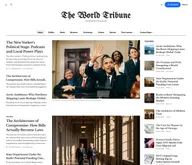
Tribune
Strongest hereTribune is the front page of a newspaper. Lead stories beside the day's picture, a Featured list at the edge, then your sections by topic, each in its own layout, under a masthead that folds away as the reader scrolls. Built for newspapers and multi-author magazines that publish several stories a day, and managed entirely from Ghost admin.
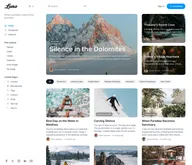
Luno
Strongest hereLuno is a blog that works like an app. A menu that stays open in a fixed sidebar, search a keystroke away, a light and dark switch beside your logo, and a homepage that opens with three featured stories as cover cards. Built for travel, lifestyle and product blogs whose readers expect an interface they already know, and managed entirely from Ghost admin.


Comparing options? Browse all premium Ghost themes side by side.
Get every theme in one bundle
The complete Luxe Themes bundle: every theme, one purchase.